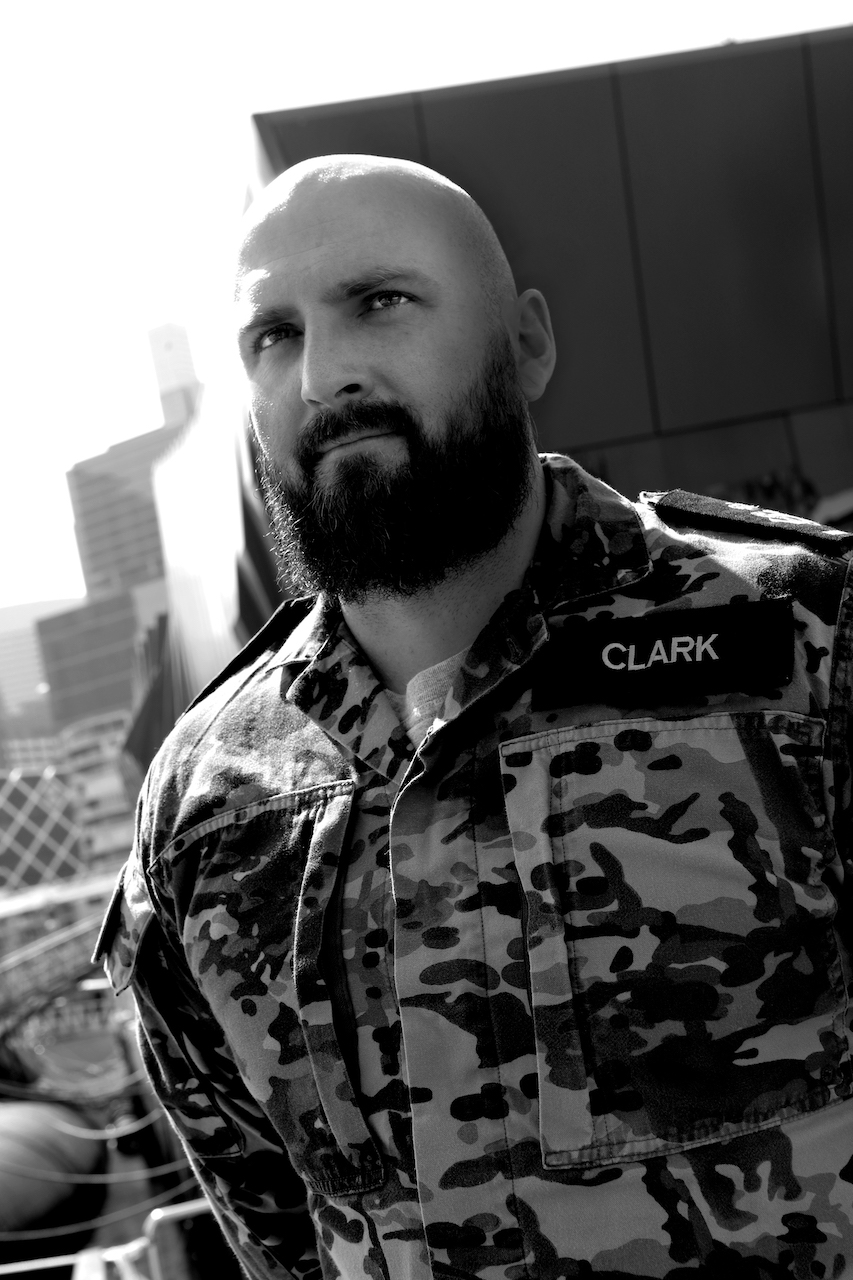
“If what we do today instils passion, enthusiasm and empowerment for our youth of tomorrow, then our people will continue to grow in strength and be proud of who we are.”
– Cameron Clark


“If what we do today instils passion, enthusiasm and empowerment for our youth of tomorrow, then our people will continue to grow in strength and be proud of who we are.”
– Cameron Clark
Cameron Clark
Bundjalung People
Petty Officer
Royal Australian Navy
Medals
Australian Operational Service Medal – Border Protection
Australian Defence Medal
Commanding Officers Commendation 2015
Commanding Officers Commendation 2017
Australia Day Achievement Award 2023
“Growing up on a dairy farm near Casino NSW, with three siblings, I did not have much, but we had enough. Without ceiling fans or air-conditioning, cooling off meant laying under the trees or finding shaded concrete. The farm instilled a strong work ethic in me and, without realising it, a deep connection to and respect for Country.
I have always been competitive, and this manifested in my relationship with my siblings. With little to entertain us, we competed fiercely in various sports. My parents recognised this early and encouraged my sporting potential while balancing work on the farm.
In a rural town, there was little to keep people occupied or out of trouble. I thought I was missing out by working on the farm, but in hindsight, it kept me focused. From an early age, I operated heavy machinery, planted ryegrass, drove vehicles, and built fences. I found it odd that town kids could not do these things. My perspective shifted when I first encountered city life, complete with traffic lights and trams.
Growing up, culture was not openly discussed or celebrated among the youth. It was a time marked by shame, injustice, domestic and lateral violence, and harmful stereotypes that deeply affected our community. I was fortunate to have a few role models who taught me valuable lessons about my culture and what it meant to be a strong Indigenous man. One of my proudest teenage moments was mastering the boomerang, an achievement that I shared with an elder who had guided me.
At a young age, I chose to leave home, determined not to accept the status quo. I could not envision myself as the next generation of dairy farmers without exploring the world. At seventeen, I joined the Royal Australian Navy, and my world expanded rapidly. I travelled to places I had never imagined, experiencing things I thought impossible. My time in the Navy opened my eyes to the power of taking risks and believing in oneself.
Despite these experiences, I struggled with my sense of belonging and cultural heritage, often keeping it to myself. However, the Navy also gave me the opportunity to connect on different levels, deepening my understanding of the importance of culture, belonging, and staying connected to Country
After years of career development, I decided it was time to give back. I asked myself what I had missed growing up and what I wanted to provide for the next generation. The answer came easily – positive role models who are consistent and supportive, regardless of how tough things get. I wanted to be like the elders who had supported me during my youth. I also wanted to show that there are opportunities and pathways to change, providing a way out for those who choose it. I believe our youth are capable and resilient, more so than we sometimes give them credit for.
My goal has always been to create positive change from within. I want the Defence Force to recognise, appreciate, and support the ongoing contributions and sacrifices of Indigenous personnel. By breaking down barriers, I aim to show that opportunities are within reach and that there are pathways available. Support is always there, and those of us who have been in similar situations are ready to help others find it. Helping people reach their full potential is one of the most rewarding aspects of my role.
There are times when I question if we have done enough or are truly committed, but with the support of the community and the strong cultural presence within the Navy and beyond, I believe anything is possible. I am deeply grateful for the generosity and support of First Nations peoples, who welcome everyone, regardless of family ties or songlines. This sense of unity and strength is what sustains our culture today.
Being a part of First Nations culture is a powerful gift. Our connection, stories, and history are what define our value and worth. If you understand your value, know your worth, and face challenges with resilience while sharing in the good times, that is true power to me.”
– Cameron Clark